

Standard Manual Wheelchairs
Large rear wheels let some users propel themselves, while push handles allow caregiver help. This can be a practical choice for everyday use when the seat, controls, and overall width fit correctly.
Compare manual, transport, lightweight, power, and heavy-duty wheelchairs. Learn what to measure, which features to check, and when professional fitting may be important.
Disclosure: We may earn a commission if you purchase through links on this site, at no extra cost to you. Our recommendations remain independent.

The right wheelchair depends on who will move the chair, where it will be used, how often it will be used, and whether it fits the person and the home. Start by comparing the five common types below.
Large rear wheels let some users propel themselves, while push handles allow caregiver help. This can be a practical choice for everyday use when the seat, controls, and overall width fit correctly.

Four small wheels make these chairs lighter and easier for trips, but a caregiver normally pushes them. Check the handle brakes, footrests, folded size, chair weight, and the user's comfort.

These chairs fold for storage or vehicle transport. Compare the chair's total weight, seat comfort, stated weight capacity, folded size, and how easily a caregiver can lift it.

Joystick-controlled movement can provide more independent mobility for someone who cannot comfortably self-propel. Check turning space, charging, battery information, transportation, home access, and service support.

Wider seats, reinforced frames, and higher stated weight capacities may provide a better fit for some users. Check the seat width, overall chair width, doorway clearance, vehicle fit, and the manufacturer's stated capacity.
This illustration shows the general differences between a compact manual wheelchair, a power wheelchair, and a wide-seat heavy-duty wheelchair. It does not represent a specific brand or model.
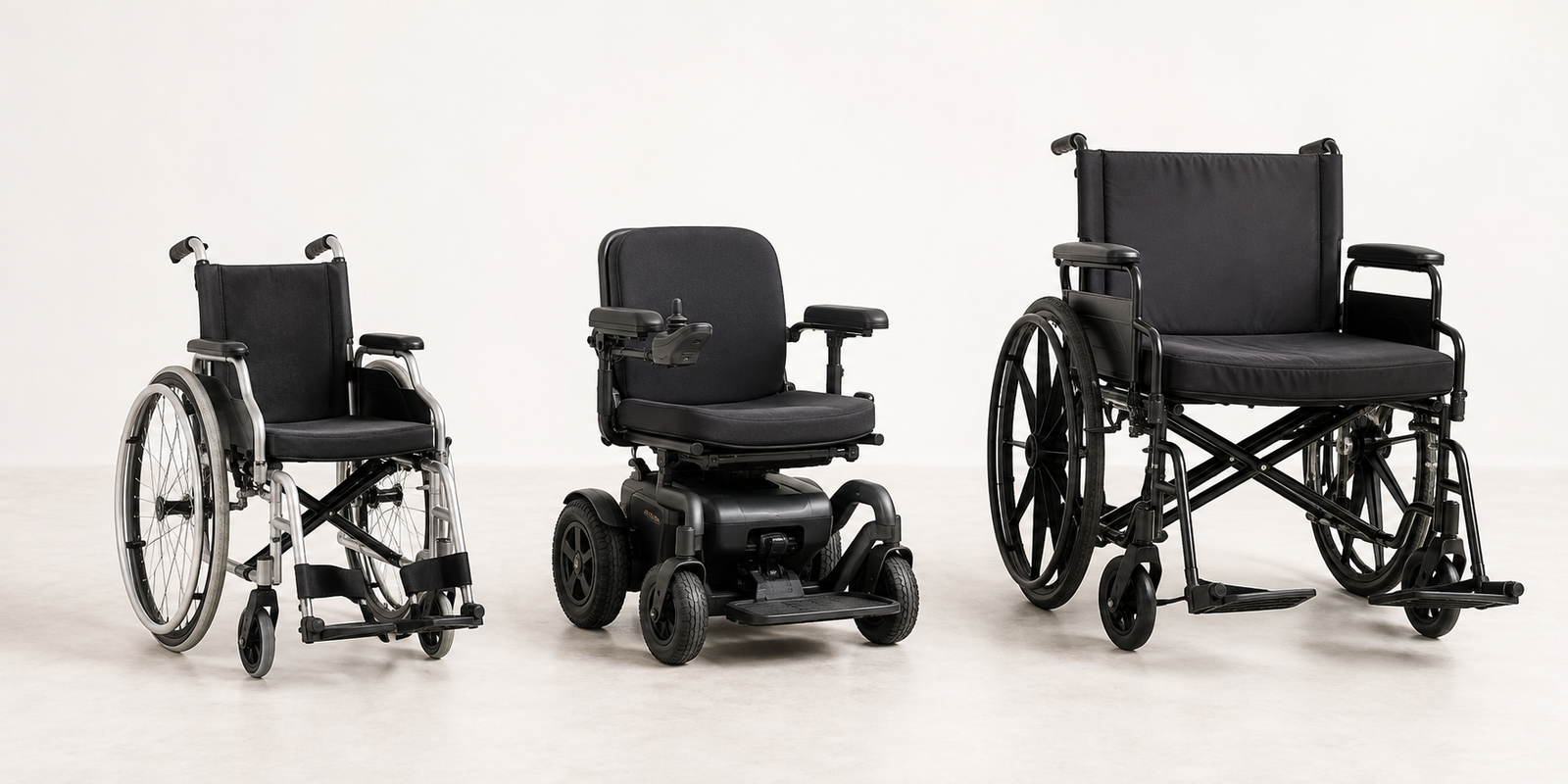
Moved by the user, a caregiver, or both. It may be easier to use in tighter spaces or transport in a vehicle. Always check the seat fit and the chair's complete outside width.
Moved by a battery-powered motor and joystick. Check turning space, charging requirements, battery information, transportation method, and access throughout the home.
Built with a wider seat and reinforced frame. Check the stated weight capacity, seat dimensions, total chair width, doorway clearance, and vehicle fit.
Two wheelchairs can look similar but work very differently. Examine the chair's complete design before comparing prices.
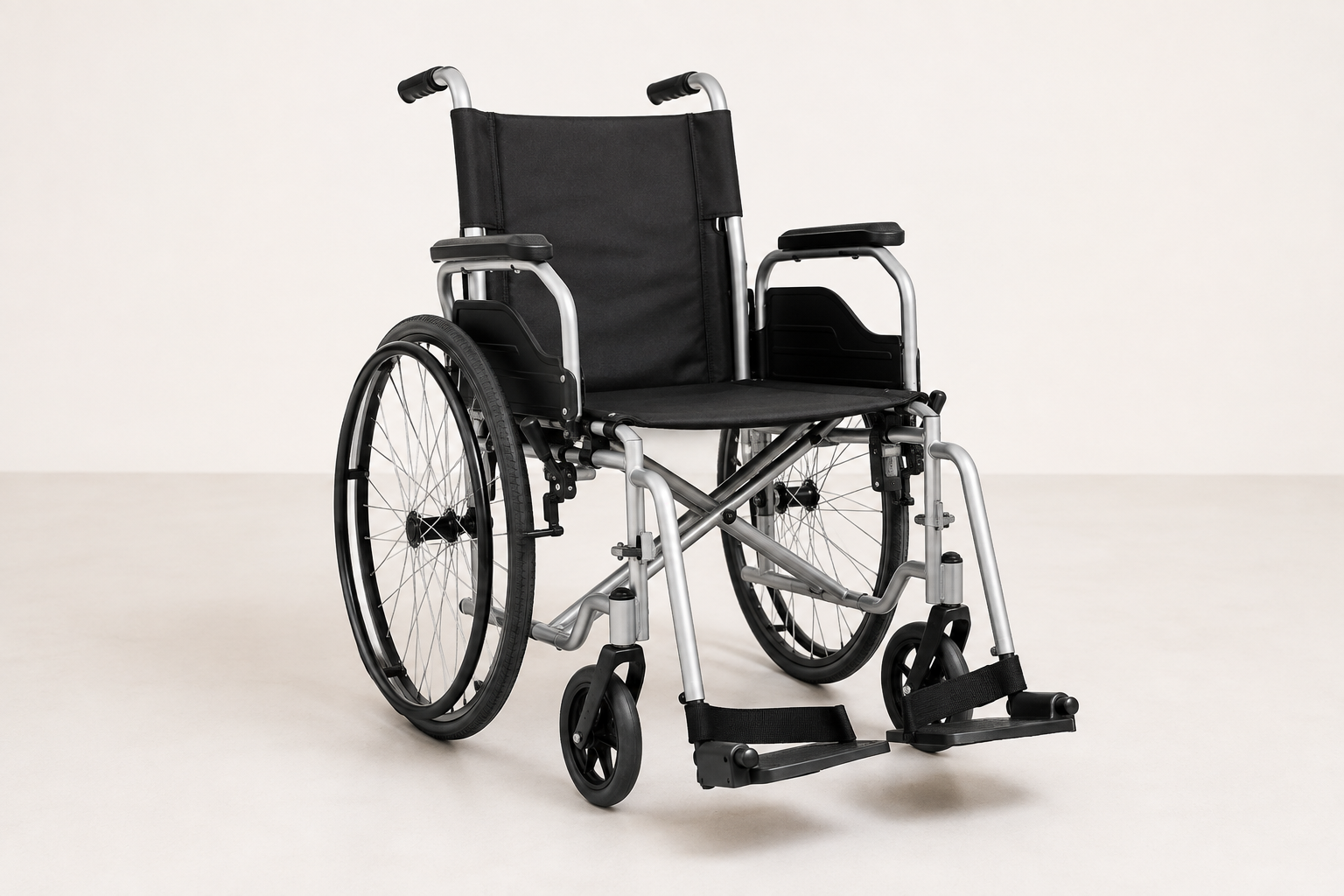
Check the seat width and depth, overall chair width, folding frame, large rear push-rim wheels, wheel locks, armrests, footrests, total chair weight, and folded dimensions.
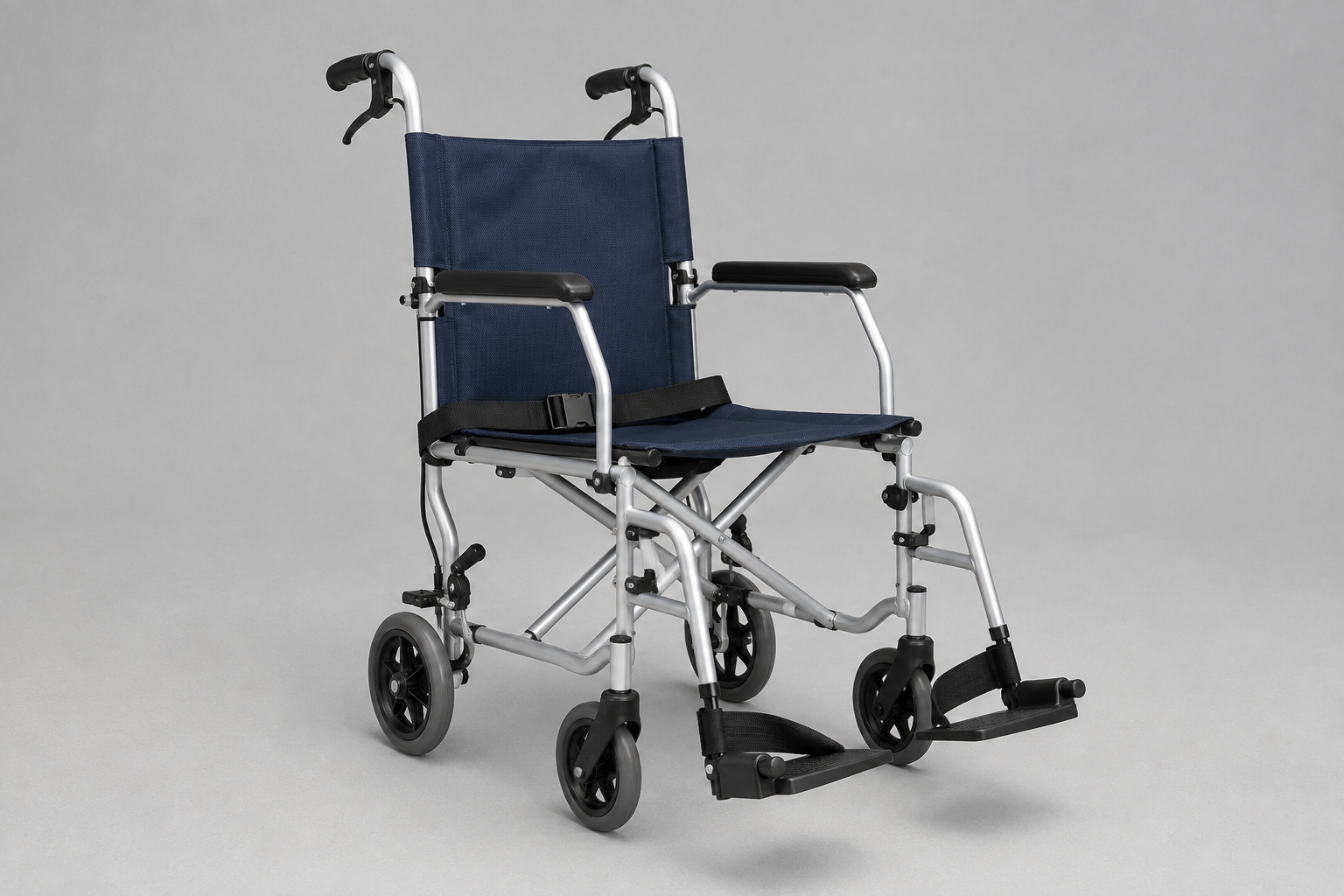
Look for four small wheels, secure push handles, caregiver-operated brakes when included, stable armrests, removable footrests, folded dimensions, and the total lifting weight.
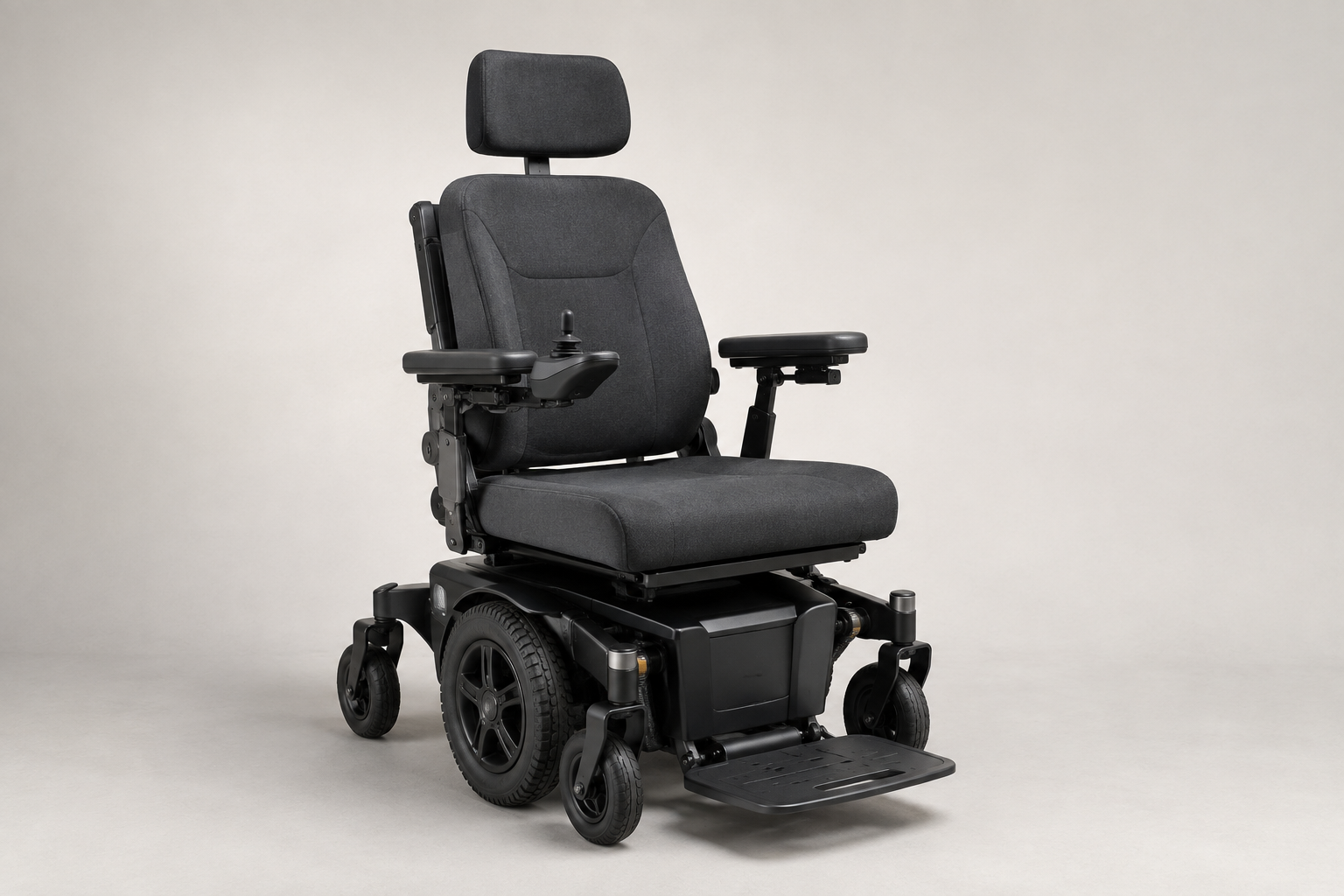
Check the joystick position, powered wheelbase, footplate, turning space, charging method, battery information, seat support, transportation requirements, warranty, and repair service.
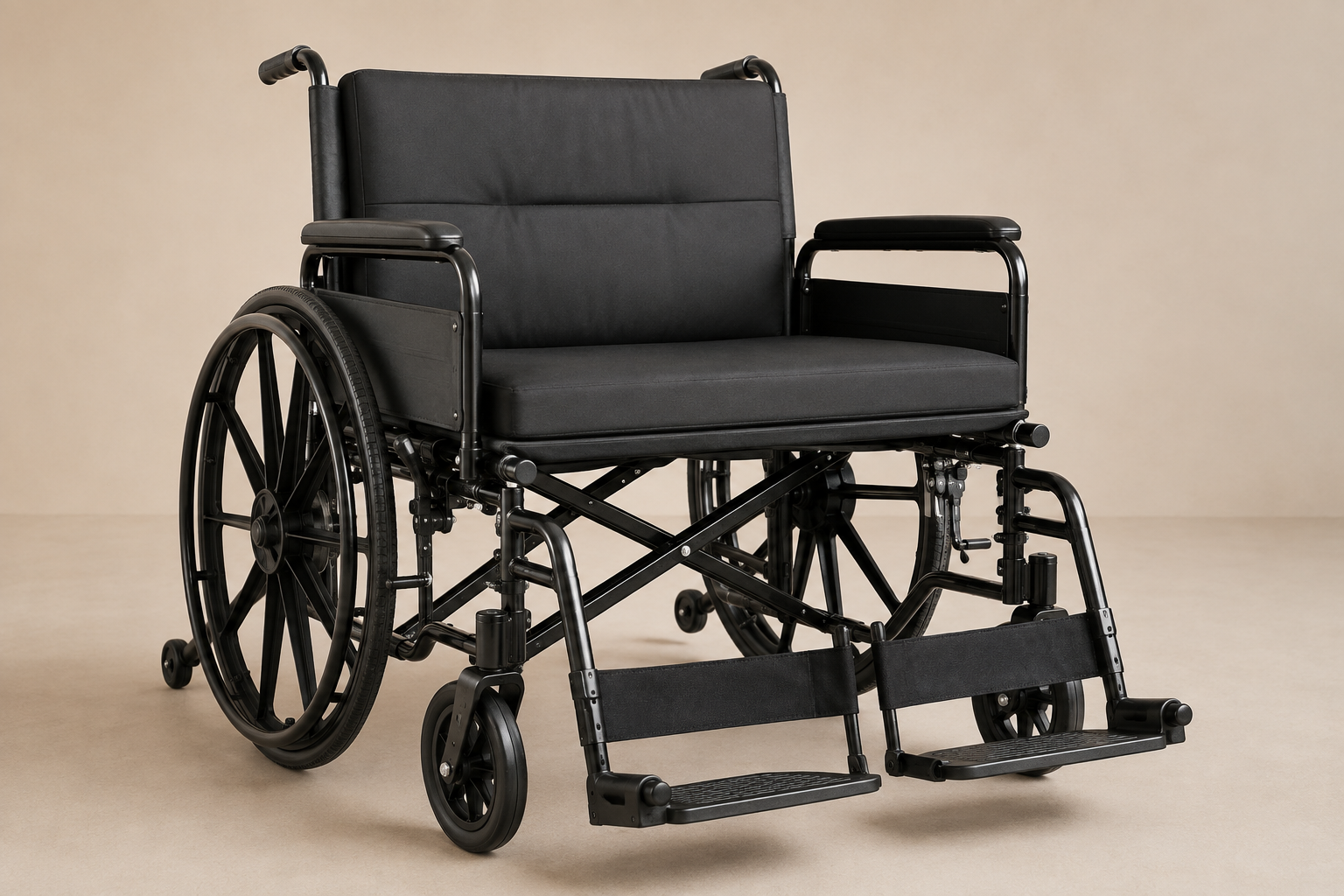
Check the seat width and depth, reinforced frame, stated weight capacity, complete outside width, wheel locks, armrests, footrests, total chair weight, folded dimensions, doorway clearance, and vehicle fit.
Do not choose a wheelchair from a photograph or body weight alone. The chair must fit the person, the home, and the way it will be used.
Check the manufacturer's seat-width and seat-depth guidance. A wheelchair used daily or for long periods may require professional fitting for comfort, posture, and pressure management.
Check footrest height, leg position, ground clearance, and whether the footrests swing away or remove for transfers and storage.
Measure the narrowest doorway, hallways, bathroom entrance, turning areas, ramps, and thresholds. Compare those measurements with the chair's complete outside width and turning space.
Check the chair's folded dimensions, total lifting weight, trunk or cargo opening, and whether a power wheelchair requires a ramp, lift, or suitable vehicle.
Write down these answers before comparing individual wheelchairs.
A lower price is not a bargain when the chair does not fit, cannot move through the home, or has an unsuitable return policy.
Ask a doctor, occupational therapist, physical therapist, or trained wheelchair professional for help when the chair will be used every day or for long periods, when the user has pain or pressure concerns, when posture or control is difficult, or when a power wheelchair or specialized seating may be needed.
World Health Organization guidance emphasizes individual assessment, fitting, training, and follow-up by appropriately trained personnel.
Read WHO Wheelchair Provision GuidanceMedicare Part B may cover a medically necessary wheelchair as durable medical equipment when it is prescribed for use in the home. Power-wheelchair coverage requires an in-person examination and a written prescription. Certain power wheelchairs may also require prior authorization.
Coverage, rental or purchase rules, participating suppliers, and out-of-pocket costs vary. Confirm the requirements before buying with Medicare, the person's health plan, the treating provider, and a Medicare-enrolled durable medical equipment supplier.
Check Medicare Wheelchair CoverageThis page provides general educational information. A wheelchair should match the user's mobility, seating, support, control, home-access, and transportation needs. Seek qualified professional guidance when appropriate.