
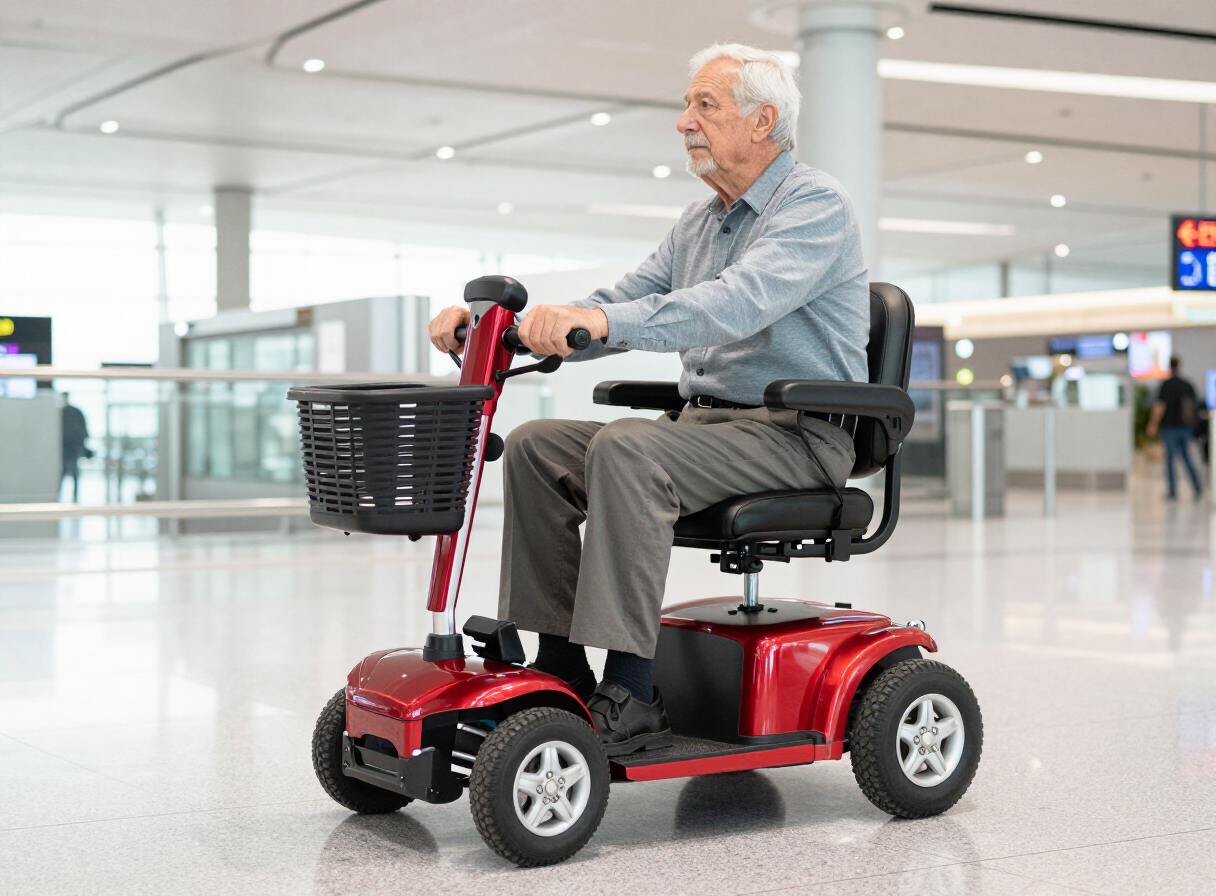
Compact Travel Scooters
Smaller frames and lighter components can make vehicle transport easier. Check the scooter's total weight, heaviest piece, disassembly steps, trunk fit, seat comfort, stated range, and ground clearance.
Compare compact travel, folding, three-wheel, four-wheel, and heavy-duty mobility scooters. Learn what to measure, which features to check, and what to consider before transporting or buying one.
Disclosure: We may earn a commission if you purchase through links on this site, at no extra cost to you. Our recommendations remain independent.

The right scooter depends on where it will be used, the available turning space, the surfaces it must cross, how it will be transported, and whether the seat and controls fit the user. Start by comparing the five common types below.
Smaller frames and lighter components can make vehicle transport easier. Check the scooter's total weight, heaviest piece, disassembly steps, trunk fit, seat comfort, stated range, and ground clearance.

Folding designs may require less storage space, but folded size and lifting weight vary. Check whether the scooter folds manually or automatically, how the battery is handled, and whether the folded scooter fits the intended vehicle or storage area.
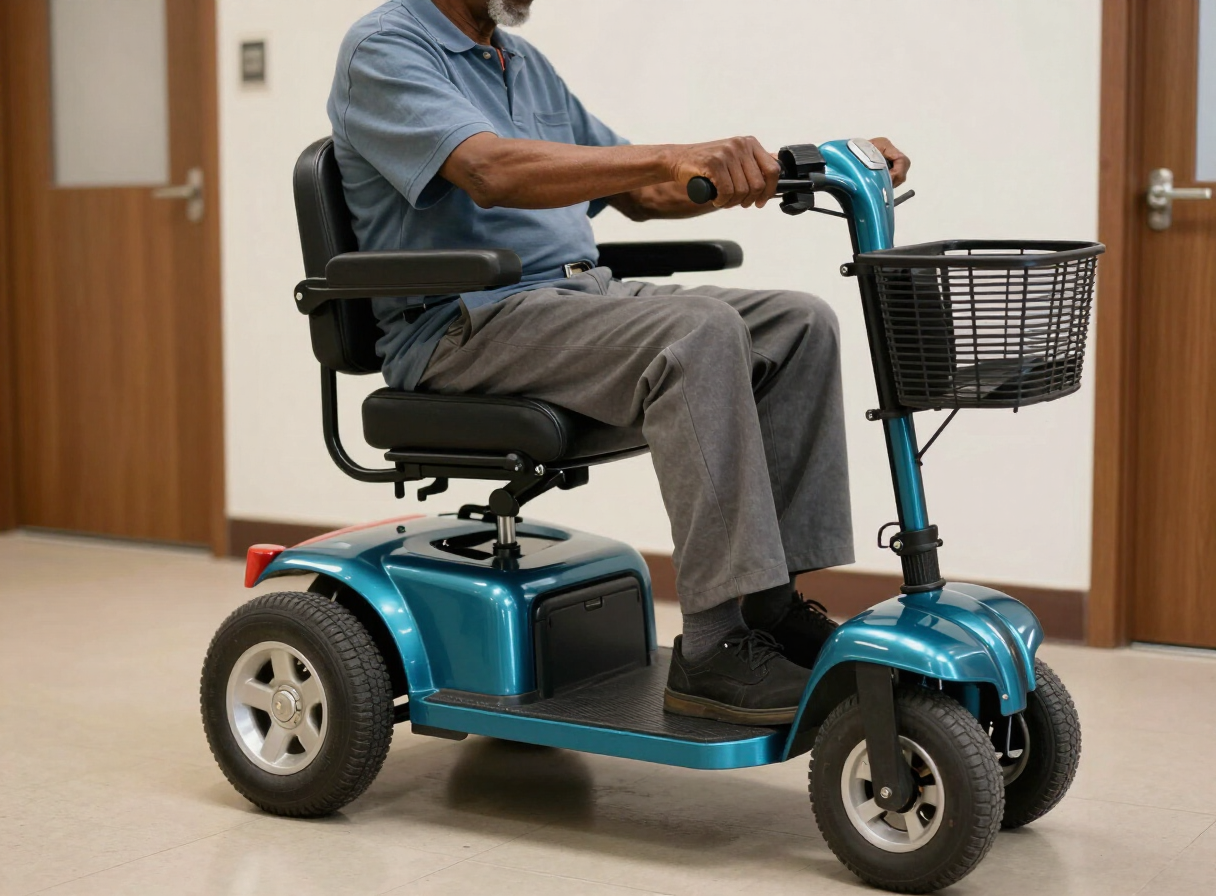
A three-wheel design may offer a tighter turning circle for indoor spaces. Compare stability, floor transitions, slopes, outdoor surfaces, overall width, and the manufacturer's stated turning radius.

A four-wheel design generally has a broader footprint. Compare turning space, stability on appropriate surfaces, overall length, ground clearance, seat fit, and transportation weight.
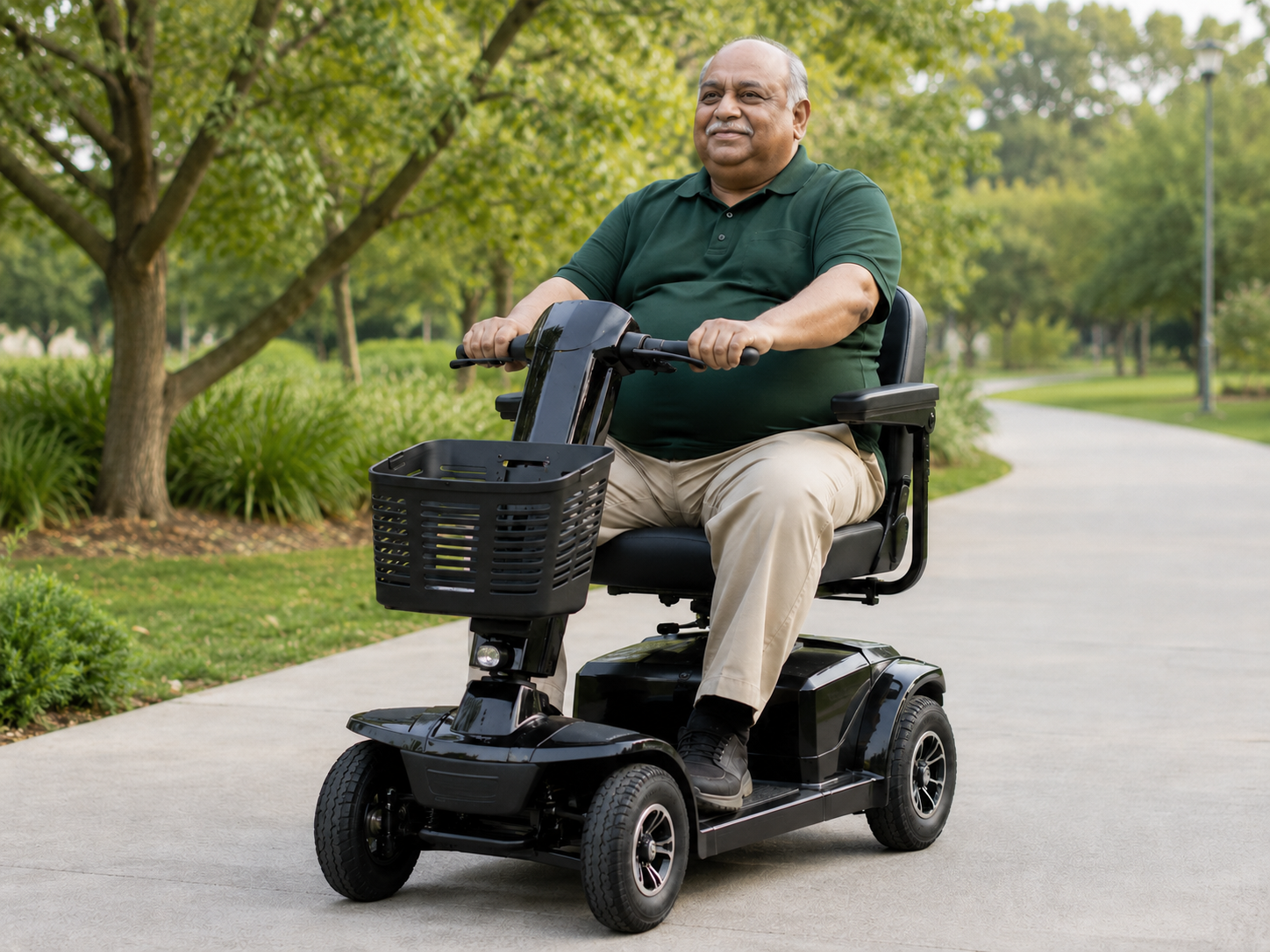
Wider seats, reinforced frames, larger tires, and higher stated weight capacities may suit some users. Check the complete scooter width, turning space, ramp or lift capacity, storage, transportation, warranty, and repair support.
This illustration shows general differences between compact travel, three-wheel, four-wheel, and heavy-duty mobility scooters. It does not represent a particular brand, model, or product recommendation.
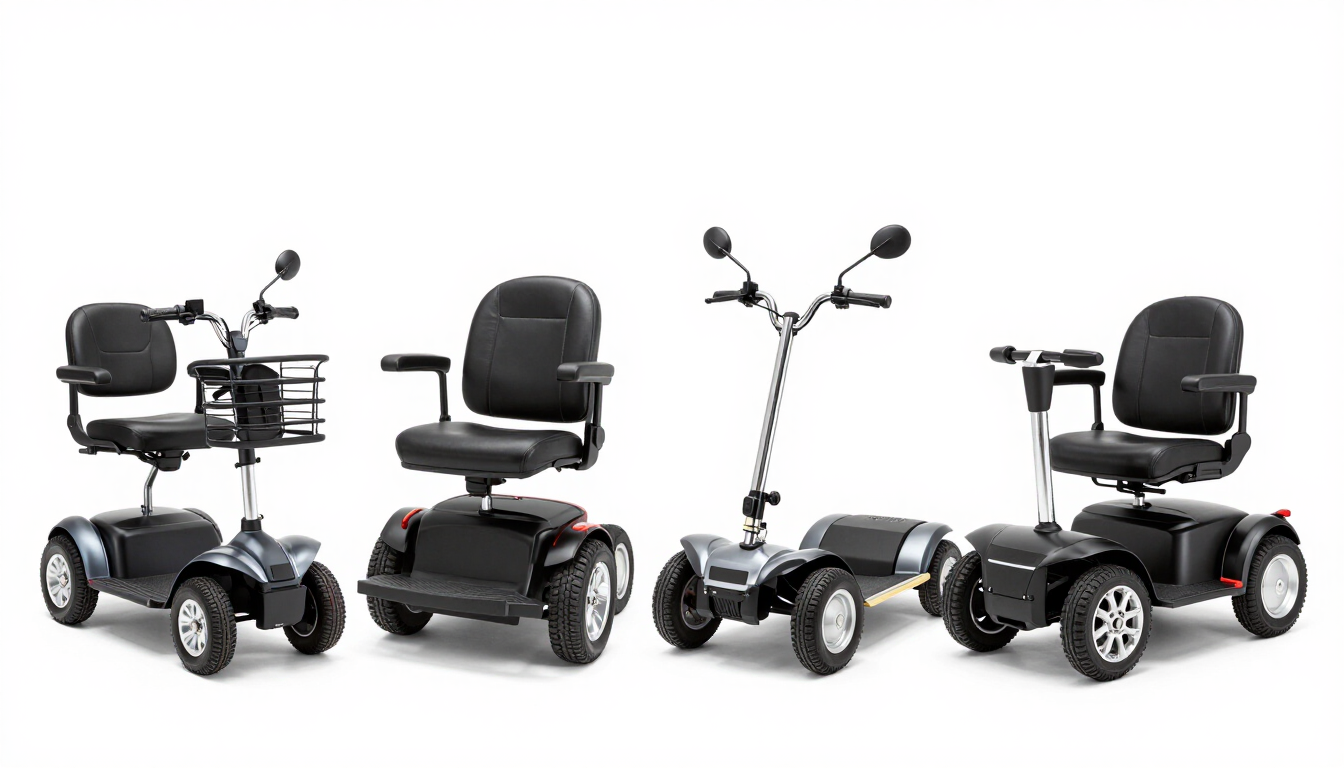
Designed with transportation and storage in mind. Check the total weight, heaviest piece, disassembly, folded or separated dimensions, seat comfort, and ground clearance.
Often chosen when a tighter turning circle is important. Check stability, turning radius, slopes, thresholds, outdoor surfaces, and the user's ability to control the scooter safely.
Generally built with a broader wheel footprint. Check the complete length and width, turning space, ground clearance, transportation weight, and intended surfaces.
Built with a wider seat, reinforced structure, and larger tires. Check the stated weight capacity, total width, turning space, ramp or lift capacity, storage, and service support.
Two scooters can look similar but have very different weights, turning space, battery systems, controls, and transportation requirements. Examine the complete design before comparing prices.
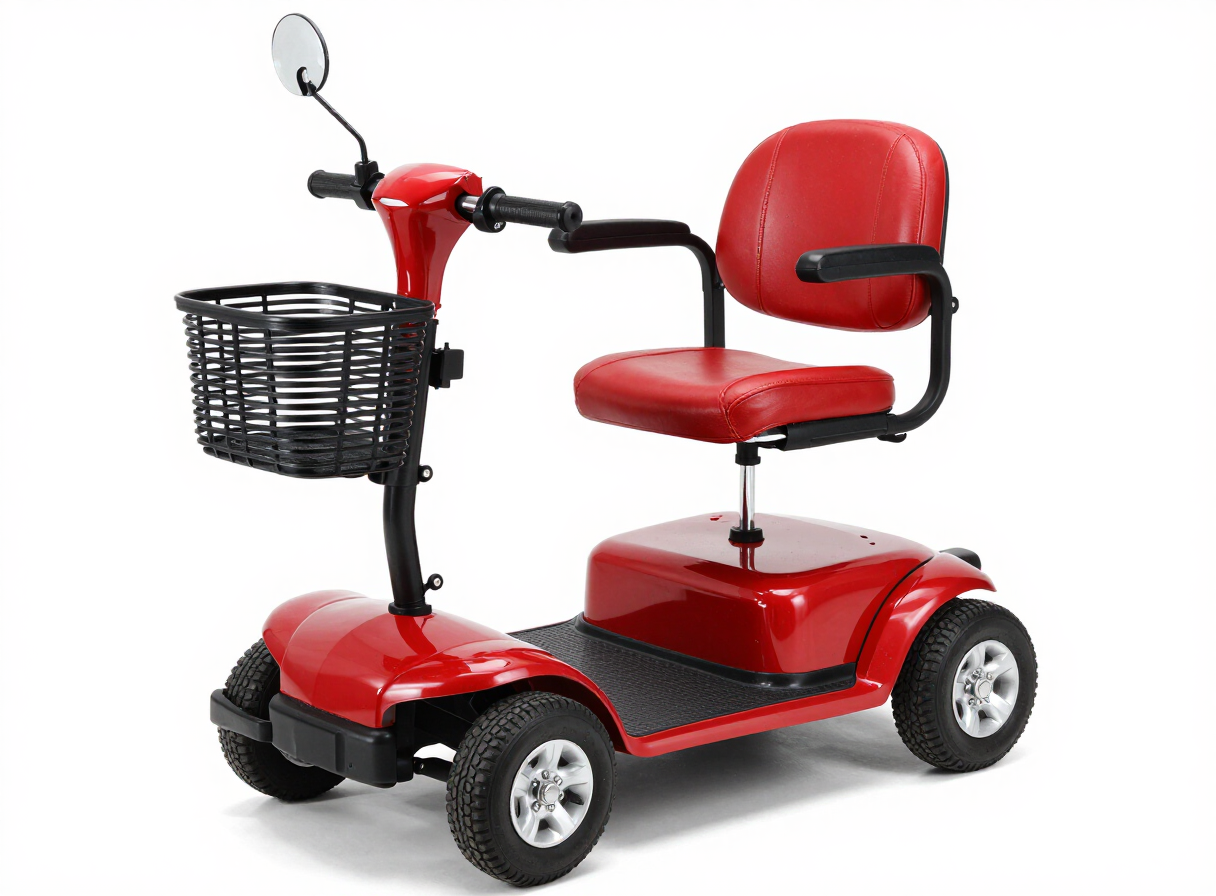
Check the total scooter weight, heaviest removable piece, disassembly steps, seat size, armrests, tiller adjustment, battery removal, basket, foot platform, wheel size, ground clearance, and trunk fit.
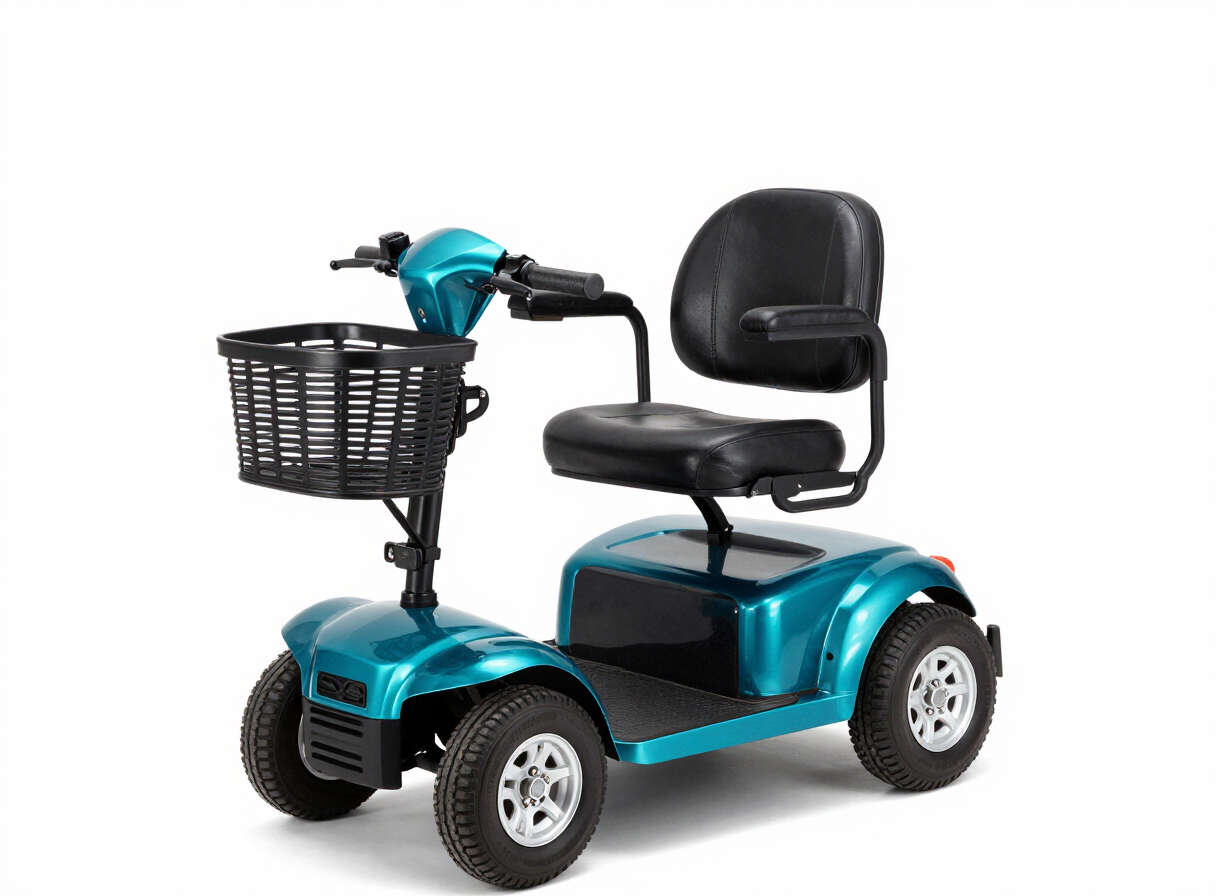
Check the single front wheel, rear-wheel spacing, turning radius, seat fit, armrests, tiller controls, basket, foot platform, ground clearance, stability, and the surfaces approved by the manufacturer.
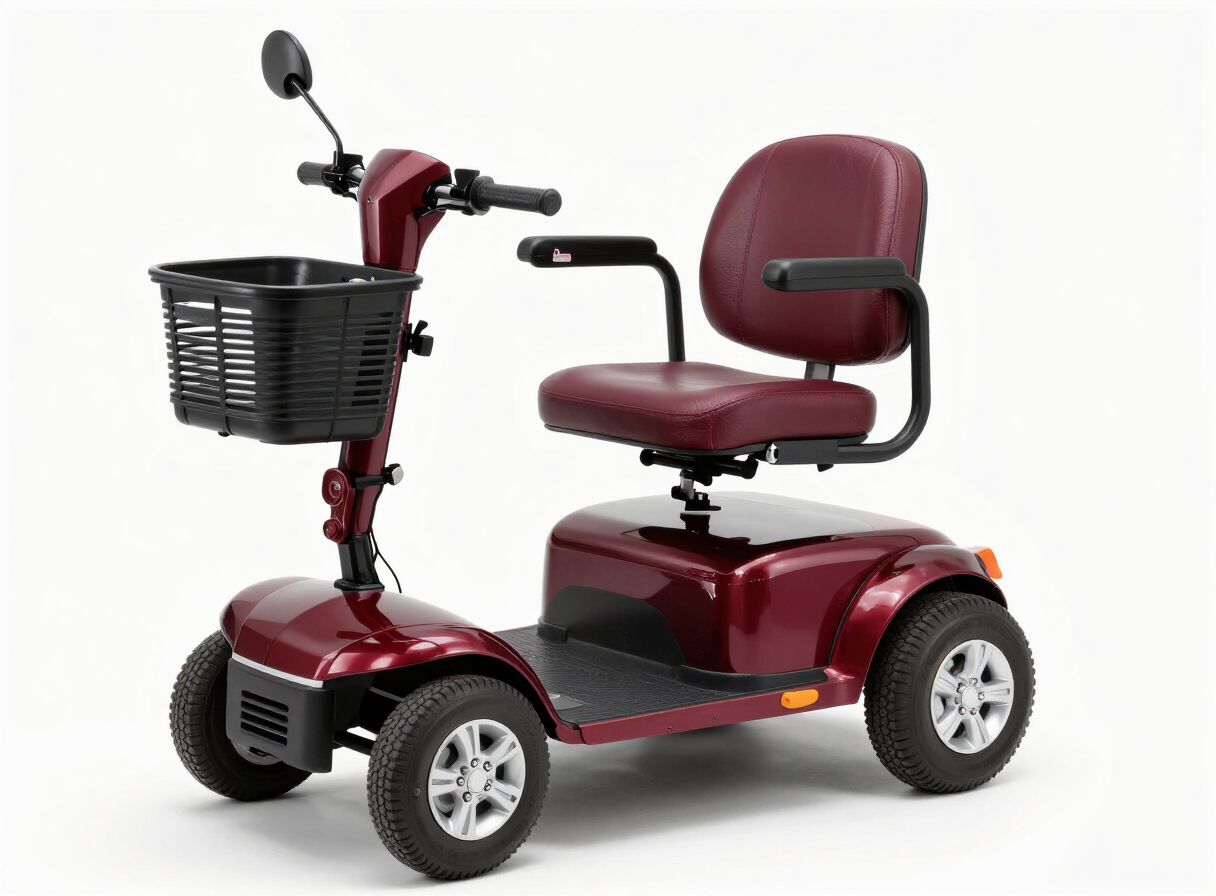
Check the two front wheels, two rear wheels, complete length and width, turning radius, seat fit, armrests, controls, basket, foot platform, ground clearance, and transportation weight.
Do not choose a mobility scooter from a photograph or body weight alone. The scooter must fit the user, the home, the transportation method, and the places where it will be operated.
Check the manufacturer's seat-width and seat-depth guidance, armrest position, tiller reach, legroom, foot-platform space, control type, and whether the seat swivels safely for transfers.
Measure the narrowest doorway, hallways, elevators, storage area, ramps, and turning locations. Compare those measurements with the scooter's complete width, length, and stated turning radius.
Check the total scooter weight, heaviest removable piece, folded or disassembled dimensions, trunk or cargo opening, and the stated capacity of any ramp, carrier, or vehicle lift.
Check the battery type, charging method, replacement cost, storage instructions, and manufacturer's stated range. Actual range may change with user weight, hills, surface conditions, temperature, speed, and battery condition.
Write down these answers before comparing individual scooters.
A lower price is not a bargain when the scooter does not fit, cannot turn inside the home, cannot be transported safely, or has an unsuitable return policy.
Ask a doctor, occupational therapist, physical therapist, mobility professional, or qualified supplier for help when the user has difficulty with vision, balance, transfers, posture, reaching the controls, judgment, or safely stopping and turning. Practice in a clear, level area and follow the manufacturer's instructions before using a scooter in crowded or unfamiliar places.
Airline rules depend on the battery type, whether the battery can be removed, how the device is protected, and the airline's procedures. Contact the airline before traveling and provide the scooter and battery information it requests. Do not assume every folding or travel scooter is automatically approved for air travel.
Read FAA Mobility-Device Battery GuidanceMedicare Part B may cover a power scooter when it is medically necessary. A face-to-face examination and written prescription are required, and the doctor and supplier must meet Medicare requirements. Some models may require prior authorization.
Buying privately and using Medicare are two separate paths. Affiliate retailers linked elsewhere on this page are private-pay sellers and do not bill Medicare for purchases made through our links. Do not assume that a private purchase will be reimbursed. To pursue Medicare coverage, verify eligibility before purchasing and use Medicare's official directory to find an enrolled medical-equipment supplier. Ask whether the supplier accepts assignment.
This page provides general educational information. A mobility scooter should match the user's seating, control, turning, home-access, transportation, battery, and safe-operation needs. Verify all measurements, specifications, limitations, warranty terms, and return policies with the manufacturer or seller before buying. Seek qualified professional guidance when appropriate.