
Lift chair vs recliner: what's the difference?
Lift chairs and recliners look similar, but they serve different purposes. Understanding the differences helps you choose the right option for your needs and budget.
The main difference: lifting mechanism
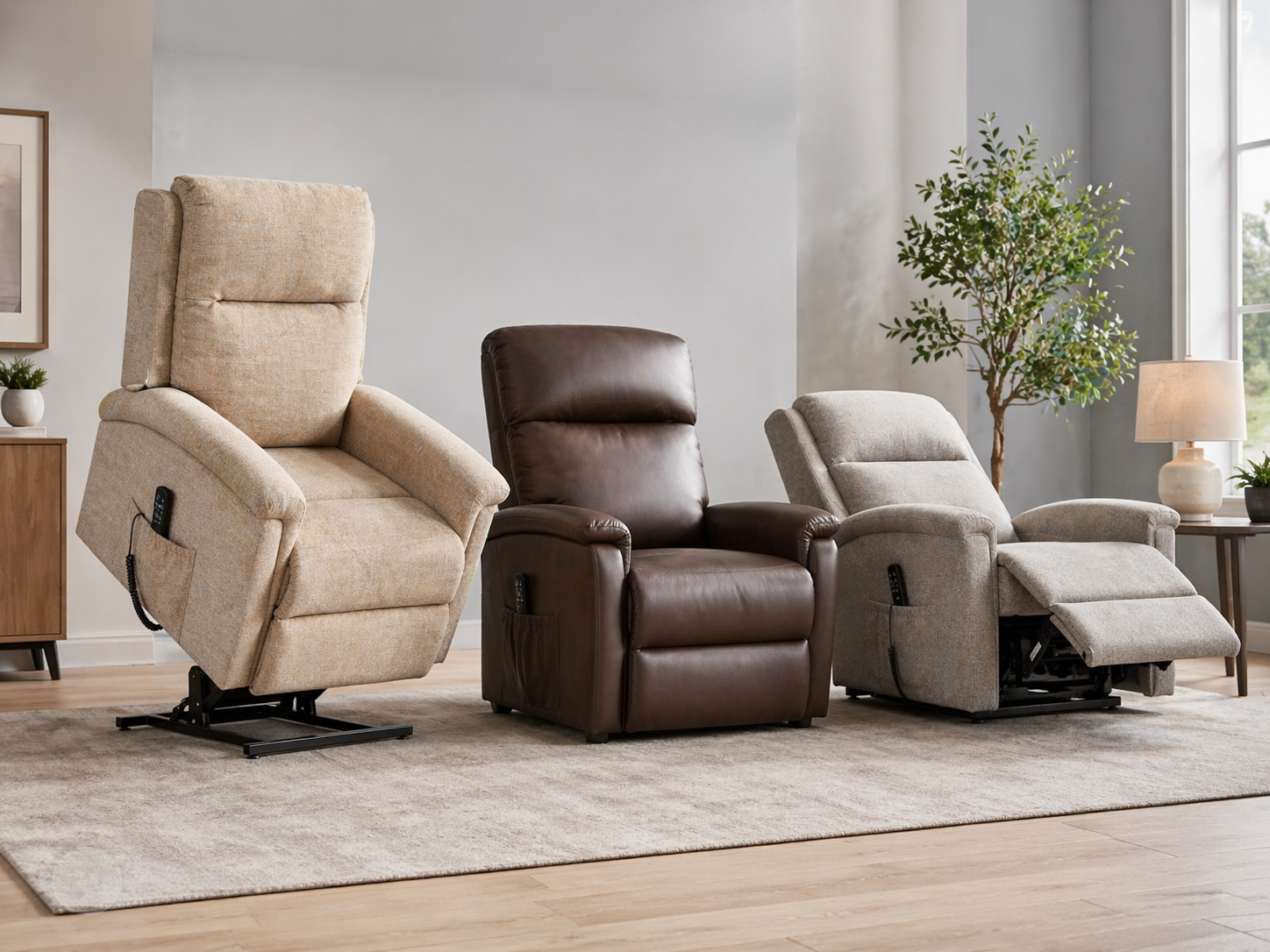
A recliner is a comfortable chair that reclines backward. You use your own strength to get in and out of it. A lift chair has a motorized mechanism that tilts the entire chair forward, helping you stand up with less effort.
How a recliner works
You pull a lever or push a button to recline the backrest and extend the footrest. To get up, you push the footrest down and use your leg and arm strength to stand. This requires good knee strength and balance.
How a lift chair works
You push a button and the entire chair tilts forward and upward, gently lifting you to a standing position. Your feet stay on the floor and you don't need much knee or arm strength. The chair does most of the work.
When you need a lift chair instead of a recliner
Consider a lift chair if you:
- Have trouble standing up from regular chairs
- Experience knee pain or weakness
- Have balance issues that make standing risky
- Recently had surgery and need help getting up
- Want to reduce your risk of falling
- Need to stay independent longer
If you have weak knees specifically, see our guide on lift chairs for weak knees.
When a recliner might be enough
A regular recliner works fine if you:
- Can stand up from chairs without difficulty
- Have good knee strength and balance
- Just want a comfortable place to relax
- Don't have mobility concerns
Cost comparison
Recliners typically cost less than lift chairs because they don't have the motorized lifting mechanism.
Prices vary substantially by chair size, upholstery, motor configuration, optional features, seller, delivery method and current availability. Compare the complete delivered cost and current return terms rather than relying on a general price range.
For affordable options, check our budget lift chair guide.
Could Medicare help with the cost?
Original Medicare Part B may cover the seat-lift mechanism—but not the chair itself—when Medicare's medical-necessity and documentation requirements are met. Confirm eligibility before buying and use a Medicare-enrolled supplier.
Buying privately and using Medicare are two separate paths. Affiliate retailers linked elsewhere on this page are private-pay sellers and do not bill Medicare for purchases made through our links. Do not assume that a private purchase will be reimbursed. To pursue Medicare coverage, verify eligibility before purchasing and use Medicare's official directory to find an enrolled medical-equipment supplier. Ask whether the supplier accepts assignment.

Features comparison
Reclining positions
Both lift chairs and recliners offer multiple reclining positions. The difference is in how you control them:
- Manual recliners: Use a lever to recline
- Power recliners: Use a button to recline (but no lift function)
- Lift chairs: Use a button to recline AND lift
Learn about different position types in our guide: Position types explained
Additional features
Both types can include:
- Heat and massage
- USB charging ports
- Cup holders and storage pockets
- Various upholstery options
Lift chairs may also include:
- Battery backup (works during power outages)
- Programmable positions
- Dual motors for independent back and leg control
Space requirements
Both types need clearance to recline. Lift chairs need slightly more space because they tilt forward when lifting.
- Standard recliner: 4-5 feet of clearance in front
- Wall-hugger recliner: 6-12 inches from wall
- Standard lift chair: 4.5-5 feet of clearance in front
- Wall-hugger lift chair: 4-6 inches from wall
If space is limited, see our guide on small lift chairs.
Durability and maintenance
Lift chairs have more mechanical parts (motor, lifting mechanism) that can need maintenance or repair. Service life varies with construction, user weight, frequency of operation, maintenance, environment and repair support. We found no reliable universal lifespan that applies to all lift chairs.
Recliners have fewer moving parts, which can mean less maintenance. But a power recliner has a motor too, so the difference isn't huge.
Both types need regular cleaning and occasional tightening of bolts and screws.
Making your decision
Choose a lift chair if:
- You have difficulty standing from chairs
- You want to reduce fall risk
- Your doctor recommends one
- You qualify for Medicare coverage
Choose a recliner if:
- You can stand easily on your own
- You want to save money
- You don't have mobility concerns
- You just want a comfortable chair
Still not sure? Read our complete guide: How to choose a lift chair